

 Best Sellers
 White Wine
 Rosé
Rosé
 Red Wine
 Bundles
 Shop All

Sauvignon Blanc Fumé Meaning and How It Tastes

A label reading Sauvignon Blanc Fumé promises a slightly different take on one of Australia’s best-loved white wines. The Sauvignon Blanc Fumé meaning is not that smoke has been added to the wine. Rather, it usually signals a more textural, layered expression of Sauvignon Blanc, often shaped by careful barrel work and time on lees.
For drinkers who enjoy Sauvignon Blanc’s grapefruit zest, fresh herbs and lively acidity but want a little more depth through the palate, Fumé can be a very appealing style. It retains freshness, yet trades some of the overtly punchy fruit character for savoury detail, gentle creaminess and, at times, a subtle smoky or flinty note.
What does Sauvignon Blanc Fumé mean?
Fumé is French for ‘smoked’, but the term needs a little context. In wine, it does not automatically describe a smoky flavour, nor does it refer to a grape variety separate from Sauvignon Blanc. Sauvignon Blanc Fumé is still Sauvignon Blanc. The name generally points to the winemaking style chosen after the fruit arrives at the winery.
The term has associations with Pouilly-Fumé, a celebrated Sauvignon Blanc appellation in France’s Loire Valley. Wines from that area can show a distinctive mineral, flinty character, which is often described as smoky. In the United States, the name Fumé Blanc was popularised in the late 1960s as a way of presenting barrel-fermented Sauvignon Blanc in a more serious, textured style.
In Australia, Sauvignon Blanc Fumé is not a tightly regulated legal category. That means the exact expression can vary from producer to producer. One may be fermented partly in older French oak, another may spend longer on lees, while a third may be made in a large-format barrel with almost no overt oak flavour. The common thread is intent: a Sauvignon Blanc with more shape, complexity and savoury interest than a straightforward tank-fermented style.
Sauvignon Blanc Fumé meaning in the glass
Classic Sauvignon Blanc is often made to preserve immediate aromatics. Think passionfruit, cut grass, lime, guava and snow pea, with a clean, brisk finish. These wines are usually fermented in stainless steel at cool temperatures, then bottled relatively early to capture their bright, youthful character.
Sauvignon Blanc Fumé begins with the same grape but can feel quite different. You might still find citrus and tropical fruit, though the aromas are often more restrained and nuanced. Grapefruit, lemon curd, white peach, pear skin, jasmine, fresh herbs and wet stone may come forward instead. Depending on the season and winemaking, there can be hints of roasted nuts, spice, toast or struck flint.
The greatest difference is often texture. Barrel fermentation, lees contact and gentle stirring of those spent yeast cells can build a creamy, rounded mid-palate without making the wine sweet. A well-made Fumé should still have Sauvignon Blanc’s natural line of acidity. That tension between freshness and softness is what makes the style so useful at the table.
The word Fumé can create an expectation of obvious char or campfire smoke, but that is rarely the point. New oak may contribute toast and spice when used, yet many winemakers prefer older or larger barrels that allow slow oxygen exchange without overt wood flavour. The best examples use oak as a frame rather than a headline.
Where does the smoky character come from?
When a Fumé wine does show smoke, it may come from several places. Toasted oak barrels can lend subtle notes of spice, toast and roasted hazelnut. Certain fermentation conditions can create flinty, struck-match characters. Site also matters: cool-climate vineyards with mineral soils can produce fruit with a savoury, stony edge that feels smoky even when no new oak is involved.
It is also worth separating this style from smoke taint. Smoke taint is a fault caused when grapes are exposed to bushfire smoke, and it can result in unpleasant ashtray or medicinal flavours. It is not desirable and has no connection to the deliberate, refined Fumé style.
Why cool-climate fruit suits the style
Sauvignon Blanc Fumé relies on balance. If the fruit is too ripe, barrel influence can make the wine feel broad or heavy. If it is too lean, the wine may remain sharp despite time in oak. Cool-climate vineyards offer an advantage because they tend to retain natural acidity while developing flavour slowly and evenly.
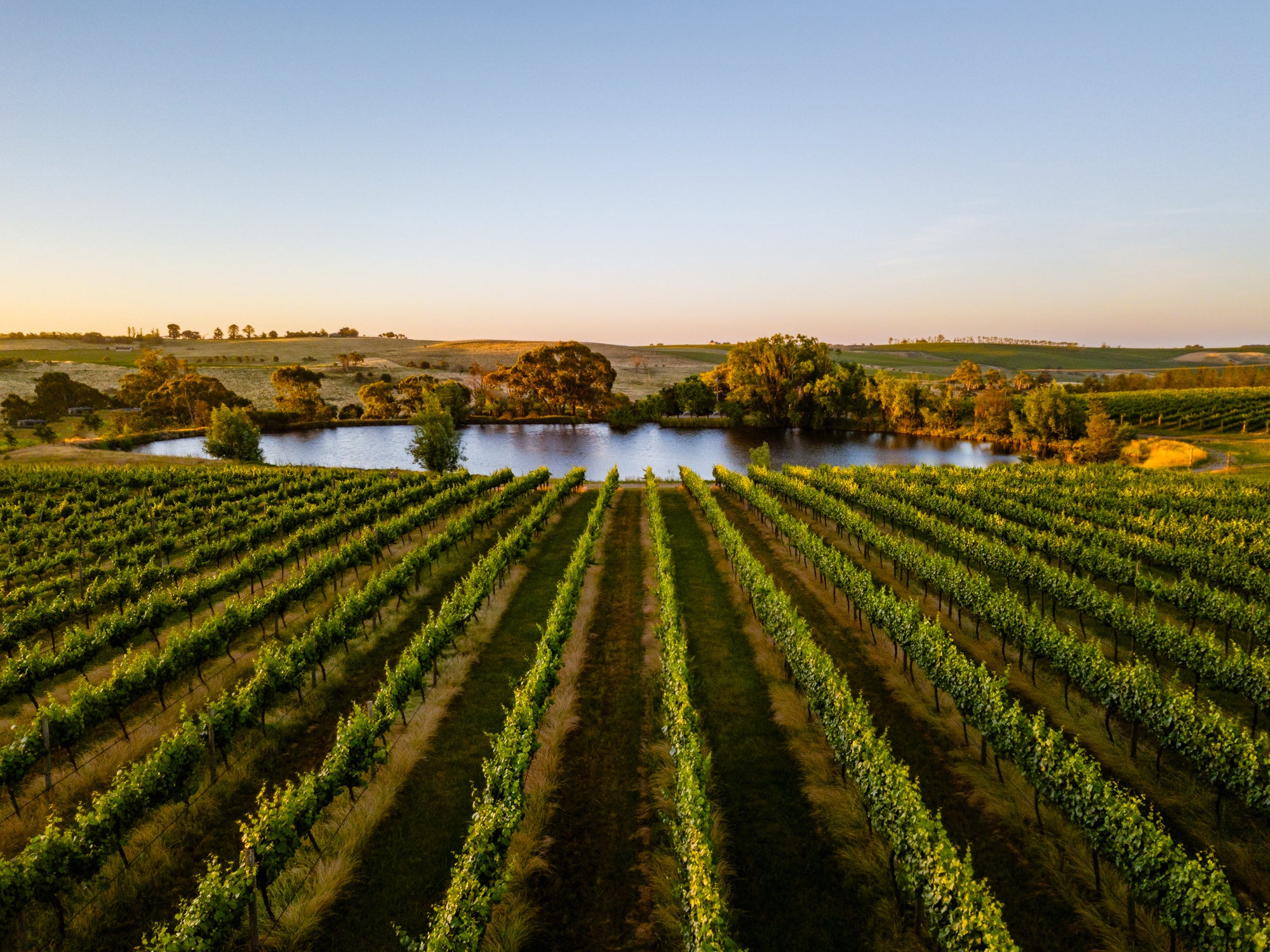
At elevation in the Orange wine region, warm days can be followed by notably cool nights. This longer ripening window helps build flavour while preserving the brightness needed for a composed, food-friendly white. The result can be Sauvignon Blanc with citrus drive and aromatic lift, but also enough concentration to carry texture from barrel fermentation and lees ageing.
Vintage will always have its say. A warmer season may bring riper stone fruit and a fuller palate. A cooler year can lean towards lemon, grapefruit, herbs and mineral notes. Neither is inherently better. It depends on whether you prefer a more generous style or one with taut, saline energy.
How Sauvignon Blanc Fumé is made
The journey from vineyard to bottle is deliberate, but it need not be complicated. Fruit is generally picked with freshness in mind, then pressed gently. Instead of sending all the juice to stainless steel, a winemaker may ferment some or all of it in oak barrels, commonly French oak and often seasoned rather than new.
After fermentation, the wine may stay on lees for several months. Lees are the fine yeast solids left behind after fermentation, and they can add texture, subtle pastry-like notes and a sense of weight through the middle of the palate. Occasional lees stirring, known as bâtonnage, can heighten that effect, though too much can obscure the purity of the fruit.
Some producers also choose partial malolactic fermentation, which softens sharper malic acid into a creamier form of lactic acid. This can add roundness, but it is a measured decision. A Sauvignon Blanc Fumé should not lose its refreshing edge or start to resemble a heavy Chardonnay.
Blending is often the final piece. A portion fermented in stainless steel can bring lifted citrus and perfume; barrel components contribute texture and savoury complexity. Bringing them together lets the vineyard character remain clear while creating a wine with more layers than either component alone.
Is Fumé drier than ordinary Sauvignon Blanc?
Usually, but not because Fumé itself means dry. Most Australian Sauvignon Blanc is made in a dry style, whether it is fresh and stainless-steel fermented or barrel influenced. The perception of dryness can change, however, because richer texture and ripe fruit may make a dry Fumé seem softer on the palate.
When choosing a bottle, look beyond the word Fumé. Tasting notes that mention grapefruit, citrus, herbs, mineral notes and a crisp finish suggest a leaner expression. Descriptions featuring stone fruit, lees, barrel fermentation, creamy texture or roasted nuts indicate a fuller, more textural wine. Both can be dry and both can be beautifully balanced.
What to eat with Sauvignon Blanc Fumé
This is where the style earns its place. Its acidity makes it a natural match for seafood, while its texture means it can stand up to richer preparation than a lighter Sauvignon Blanc. Try it with grilled prawns, pan-seared snapper, oysters with a light mignonette, or roast chicken with lemon and herbs.
It is equally at home beside spring vegetable risotto, asparagus tart, goat’s cheese, or pasta with a creamy sauce and plenty of fresh greens. For a relaxed lunch, it works particularly well with a cheese board that includes soft goat’s cheese, mild washed-rind cheese and salty almonds.
Avoid pairing it with very sweet sauces or fiery chilli, which can make the wine taste hard and overly acidic. If the dish has richness, aim for brightness alongside it: lemon, herbs, capers, fennel, apple or a fresh green salad are all reliable companions.
A style worth seeking out
For those familiar with the lively, tropical side of Sauvignon Blanc, Fumé offers another reason to return to the variety. It has the freshness expected of a good Australian white, with an added sense of patience and detail from the winery. At Nashdale Lane Wines, that approach sits naturally with high-altitude fruit and a focus on wines that are as rewarding over lunch as they are around a well-set dinner table.
The next time you see Sauvignon Blanc Fumé on a list or bottle, expect Sauvignon Blanc with a broader frame, not a different grape or an artificially smoky wine. Pour it lightly chilled rather than ice-cold, give it a moment in the glass, and let its citrus, savoury notes and gentle texture find their place.
Also in Nashdale Lane Blogs & News

10 Best Anniversary Getaways in NSW for Couples

Wine Delivery Comparison for Better Bottles